
State-to-State Ambulance Transport: The Paperwork Nobody Mentions Until You Need It
Moving someone you love across the country is a bit like packing for a trip where the suitcase happens to be a hospital bed. The route is easy to draw on a map, and the patient care is what we do every day. What catches families off guard is everything that changes when you cross a state line.
We field these calls constantly. A daughter in Ohio needs to bring her dad home from a rehab facility in Scottsdale. A couple wintering in Florida has a sudden hospital stay and wants to recover closer to their doctors in Michigan. The question is almost always the same: “What do we need to sort out before this can happen?”
Here’s the honest answer, from people who handle long distance medical transportation for a living.
Does a State Line Really Change Anything?
Clinically, no. Your mom’s care in the back of our vehicle looks the same in Nevada as it does in Nebraska.
On paper, it can change quite a bit. Each state runs its own rules for medical forms, prescriptions, and facility admissions. None of it is impossible. It just rewards the families who start early, ideally several days before the pickup date you have in mind.
Nobody Leaves Until Someone Says “Yes, We’ll Take Her”
This one surprises people. Before any cross-state transfer, the destination needs to formally accept the patient. That could be a hospital, a skilled nursing facility, assisted living, or home with hospice lined up.
Facilities in another state can’t simply be told someone is arriving Tuesday. They review records, confirm a bed, and sometimes need an accepting physician on their end. If the destination is home, you’ll want home health or hospice arranged in that state before departure, because those services are licensed locally and don’t travel along with the patient.
Get acceptance in writing if you can. It saves a lot of phone tag later.
Your DNR Might Not Speak the Local Dialect
A Do Not Resuscitate order or POLST form written in one state isn’t always honored the same way in another. Some states recognize out-of-state forms, others are pickier about format, and a few are genuinely vague.
What does that mean for you? Talk with the discharging physician about the patient’s end-of-life wishes before the trip. Bring the original documents. It’s also worth asking the receiving facility whether they’ll want a new form completed after arrival. It’s a tender conversation, we know, but settling it ahead of time protects everyone, especially the patient.
The Medicine Cabinet Gets Complicated
Prescriptions for controlled medications, pain management and certain anxiety or sleep medications especially, can be tricky to refill across state lines. The prescribing doctor back home may not be able to write for a pharmacy in the new state.
Plan for a gap. Ask the discharging team for enough supply to bridge the trip plus the first several days after arrival, and line up a new prescriber at the destination as soon as you can.
Insurance, Minus the Sugarcoating
Coverage for non-emergency medical transportation between states varies wildly. Medicare, Medicaid, and private plans each have their own definitions of “medically necessary,” and many long-distance trips end up partly or fully self-pay. Pre-authorization, when it’s available, takes time.
Call your insurer early and ask directly what’s covered. Our team is happy to walk through pricing openly, too. Nobody likes a surprise invoice, and we’d rather you have the full picture before you commit.
Who Gets to Sign?
If the patient can’t make decisions, someone else will be signing admission papers at the other end. A healthcare power of attorney is generally recognized from state to state, but bring copies anyway. Guardianship arrangements can be more complicated, so check with an attorney if one is involved.
Your Grab-and-Go Folder
Before the wheels roll, gather these into one folder:
- Written acceptance from the receiving facility or care team
- Discharge summary, recent records, and medication list
- DNR or POLST forms (originals)
- Healthcare power of attorney or guardianship papers
- Insurance cards and any pre-authorization numbers
- A bridge supply of medications
Hand it to our crew at pickup and they’ll keep it with the patient the whole way.
So You’ve Called Us. Now What?
The first conversation is mostly listening. We’ll ask about:
- Diagnosis, mobility, and any oxygen, wound care, or monitoring needs
- Pickup and destination details, plus your ideal timeline
- Whether a family member wants to ride along
From there, our coordinators build the trip around the patient, not the other way around. That covers crew qualifications, rest stops, the route, and timing that works with the receiving facility’s admission hours. You’ll get updates before departure and while we’re on the road.
Day of the Drive
Our fleet runs on Mercedes-Benz Sprinter vans outfitted for comfortable long-haul medical transportation, with Stryker stretchers and modern monitoring equipment on board. The ride is smooth, the climate is steady, and there’s space for the patient to actually rest.
Our crew is friendly, patient, and very good at small talk when it helps and quiet when it doesn’t. Many families tell us the drive itself turned out to be the calmest part of the whole move. That’s the goal. You handle the paperwork, we’ll handle the miles, and your loved one gets to spend the trip resting instead of worrying.
Have questions about a specific route or situation? Give us a call. We’ll help you figure out what comes next.
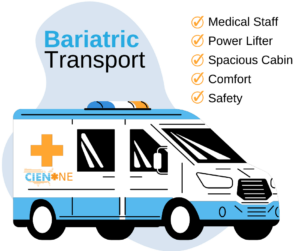
Reserve Your Transportation For Bariatric Patients
CienOne is one of the leading long-distance transport service providers for bariatric patients. Whether you need interstate or out-of-state transport service, our highly trained medical staff and skilled drivers will always be ready to assist you with 100% satisfaction.
Contact us today to know more about our bariatric stretcher transportation services and to schedule your next transport to reserve your spot.
CienOne© | Long Distance Medical Transport